
Can I Start Clear Aligner Treatment in India and Continue After Returning Abroad?
Living in the USA, UK, Canada, Germany or another country but planning a visit to India? If you are considering straightening your teeth, you may be wondering whether you can start clear aligner treatment during your visit to India and continue after returning abroad.
The answer depends on your individual orthodontic needs, the treatment plan and whether appropriate monitoring and follow-up can be arranged while you are overseas.
Clear aligners can be a convenient option for many patients, but orthodontic treatment is not simply a matter of receiving a set of aligners. It requires proper diagnosis, treatment planning, monitoring and retention after treatment.
In this guide, we explain what NRI patients should consider before starting clear aligner treatment in India.
If you are planning dental treatment during your visit to India, explore our international patient care services to understand how consultations and treatment appointments can be coordinated around your travel plans.
For a broader overview of planning dental care during your visit, read our complete guide to dental treatment in India for NRIs before travelling.
What Are Clear Aligners?
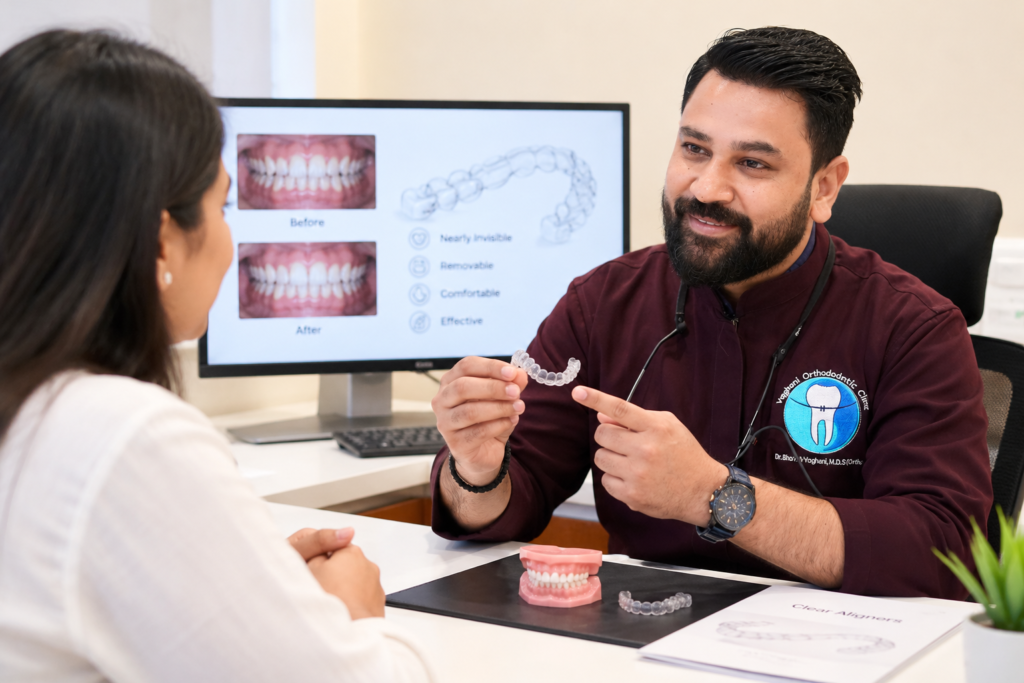
Clear aligners are transparent, removable orthodontic appliances designed to move teeth gradually according to an individual treatment plan.
They are commonly used to address selected orthodontic concerns, including crowded teeth, gaps and certain bite problems. Their suitability depends on the complexity of the case and the patient’s dental condition.
Unlike traditional braces, clear aligners can be removed for eating, drinking anything other than water, and cleaning the teeth. However, they generally need to be worn for the prescribed number of hours each day to achieve the planned tooth movements.
Successful treatment depends on more than the aligners themselves. Accurate diagnosis, an appropriate treatment plan, patient compliance and professional monitoring are all important.
Can NRIs Start Clear Aligner Treatment in India and Continue Abroad?
In selected cases, it may be possible to start clear aligner treatment in India and continue following the treatment plan after returning abroad.
However, this arrangement should be discussed and planned with your treating orthodontist before treatment begins.
Your orthodontist needs to consider the complexity of your case, the expected treatment duration, the monitoring arrangements, the availability of suitable follow-up and what should happen if your teeth do not move as planned.
Not every case is suitable for remote follow-up. Some patients need more frequent in-person assessments or additional procedures that cannot be planned around a short visit.
Before starting treatment, ask your orthodontist to explain whether your case can be managed safely while you are living overseas.
Why Is Orthodontist-Led Planning Important for Clear Aligners?
Clear aligner treatment involves much more than choosing a brand or receiving a series of trays.
A qualified orthodontist evaluates how your teeth fit together, the position of your teeth, your bite, gum health and other factors that may influence treatment.
The orthodontist then determines whether aligners are appropriate, plans the desired tooth movements and monitors progress throughout treatment.
Important considerations include:
Diagnosis: Identifying the orthodontic problems and assessing whether clear aligners are suitable.
Treatment planning: Determining the movements required and establishing a realistic treatment plan.
Monitoring: Checking whether the teeth are moving as expected and whether the aligners fit correctly.
Managing complications: Identifying problems such as poor aligner fit, unexpected tooth movement or issues with gum health.
Retention: Planning how to maintain the final tooth positions after active treatment.
For NRI patients, these responsibilities should be clearly discussed before treatment begins, especially when appointments will take place across different countries.
How Does Clear Aligner Treatment Work for NRI Patients?
The treatment process generally involves several stages.
1. Initial Online Consultation
You can begin by discussing your concerns, goals and tentative travel dates with the clinic.
Your orthodontist may ask for photographs and any available dental records to understand your concerns and determine what additional information is needed.
An online consultation is only a preliminary discussion. It cannot replace a proper clinical examination or the diagnostic records required to plan treatment.
2. In-Person Examination in India
During your visit to India, the orthodontist assesses your teeth, bite and oral health.
Depending on your case, photographs, digital scans, X-rays or other diagnostic records may be required.
These records help the orthodontist determine whether clear aligners are appropriate and identify any dental issues that should be addressed before treatment.
3. Personalised Treatment Planning
If aligners are suitable, your orthodontist develops a treatment plan based on your diagnosis and treatment goals.
You should understand the expected tooth movements, estimated treatment duration, limitations, likely appointment requirements and the possibility that refinements may be needed.
The final plan should be based on your clinical assessment, not photographs alone.
4. Receiving Your Aligners
Once the treatment plan has been approved and the aligners are available, your orthodontist explains how to wear and care for them.
You will receive instructions about daily wear, changing aligners, cleaning, storage and what to do if an aligner is lost or damaged.
Follow the schedule prescribed by your treating orthodontist rather than changing aligners faster on your own.
5. Monitoring Treatment After Returning Abroad
Your orthodontist may arrange suitable remote reviews for selected cases, using photographs or other information when appropriate.
However, remote monitoring does not replace every in-person examination. Your orthodontist may require an appointment if your teeth are not tracking as expected, the aligners do not fit properly or a clinical concern develops.
Before leaving India, establish how reviews will be arranged and how to contact the clinic if a problem occurs.
6. Refinements and Retention
Some patients need additional aligners to improve the result after the initial series. These are often called refinements.
Ask whether refinements are anticipated, how they are assessed and whether additional scans, visits or fees may be required.
After active treatment, retainers are generally needed to help maintain the corrected tooth positions. Your orthodontist should explain the retention plan and how you can obtain support while living abroad.
What Should You Check Before Starting Clear Aligners in India?
If you live abroad, planning ahead is particularly important.
Before committing to treatment, discuss these questions with your orthodontist.
Who will diagnose my case and supervise my treatment?
What diagnostic records are required?
How long is my treatment expected to take?
How often will my progress be reviewed?
Can remote reviews be used in my case, and when will an in-person appointment be necessary?
What happens if my teeth do not track as planned?
Are refinements included in the quoted fee, and what additional costs might arise?
How will I receive replacement aligners if a tray is lost or damaged?
What is the plan for retainers after active treatment?
How will follow-up be arranged after I return abroad?
Having clear answers to these questions helps you understand the responsibilities, costs and practical requirements before treatment begins.
How Much Do Clear Aligners Cost in India for NRIs?
The cost of clear aligner treatment varies according to the complexity of the orthodontic problem, the treatment system selected, the expected duration and the services included in the treatment package.
Factors that may affect the total cost include:
The complexity of tooth movements required.
The aligner system used.
The number of aligners and treatment stages anticipated.
The need for attachments, interproximal reduction or other clinically indicated procedures.
The possibility of refinements.
The frequency and type of monitoring.
Retainers and post-treatment follow-up.
Any additional visits or records required during treatment.
When comparing treatment options, do not compare prices alone. Ask for a written estimate explaining what is included and which services may incur additional fees.
For patients living overseas, it is particularly important to understand the costs associated with refinements, replacement aligners and future appointments.
Your orthodontist can provide a more meaningful estimate after assessing your case.
Can Clear Aligner Treatment Be Completed During One Trip to India?
The initial examination and some treatment arrangements may be completed during a visit to India, depending on your case and the availability of the necessary records and aligners.
However, orthodontic treatment usually continues over an extended period because teeth need time to move gradually in response to controlled forces.
Completing the initial consultation or receiving your first aligners does not mean the entire treatment will be finished before you return abroad.
Before booking your flight, discuss what can realistically be completed during your visit and how the remaining treatment will be managed.
Is Invisalign an Option for NRI Patients?
Invisalign is one clear aligner treatment system that may be suitable for selected orthodontic cases.
Whether Invisalign or another orthodontic approach is appropriate depends on your diagnosis, the complexity of your case and your treatment goals.
The brand alone does not determine the result. Diagnosis, treatment planning, clinical supervision, patient compliance and appropriate follow-up remain important.
If you are considering Invisalign during a visit to India, ask your orthodontist to explain why it may be suitable for your case, what the treatment plan involves and how monitoring will work after you return abroad.
You should also clarify the total expected cost and whether refinements, retainers and follow-up appointments are included.
Why Consider Vaghani Orthodontics in Surat for Clear Aligners?
If you are planning a visit to Surat, Gujarat, you can discuss your orthodontic goals with Dr. Bhavnit Vaghani at Vaghani Orthodontics.
With postgraduate training in Orthodontics and experience in orthodontic treatment, Dr. Bhavnit Vaghani can assess your concerns and discuss suitable treatment options based on your individual needs.
For NRI patients, advance communication can help establish what records are required, whether an online preliminary consultation is appropriate and how the treatment process might fit around your travel plans.
If you are considering clear aligners, the consultation should cover diagnosis, expected treatment duration, monitoring, possible refinements, cost and retention.
The final treatment recommendation will depend on a proper clinical examination and diagnostic assessment.
If you are also considering replacing missing teeth during your visit to India, read our guide to dental implants in India for NRIs to understand the treatment stages, costs and travel considerations.
Plan Your Clear Aligner Consultation Before Travelling to India
Considering clear aligner treatment during your next visit to Surat?
Start by sharing your main concerns, tentative travel dates and any available dental records with the clinic. This can help you understand the next steps and prepare for an appropriate consultation.
Before beginning treatment, make sure you understand how your progress will be monitored after returning abroad and how any unexpected concerns will be managed.
Contact Vaghani Orthodontics to discuss your orthodontic goals and arrange a consultation.
A well-planned treatment journey starts with an appropriate diagnosis, realistic expectations and a clear follow-up plan.
Frequently Asked Questions
1. Can I start Invisalign in India and continue treatment in the USA, UK or Canada?
It may be possible in selected cases, but the arrangements depend on your treatment plan, monitoring needs and the availability of appropriate follow-up. Discuss your overseas location and travel plans with your treating orthodontist before beginning treatment.
2. Can I get clear aligners during a short visit to India?
You may be able to complete an initial consultation and some treatment arrangements during your visit. Whether aligners can be provided during that trip depends on the diagnostic requirements, treatment planning and aligner availability.
3. Can my orthodontist monitor my aligner treatment online?
Remote reviews may be appropriate for selected patients, but they cannot replace every clinical examination. Your orthodontist should explain how progress will be assessed and when an in-person appointment is necessary.
4. What happens if my aligners stop fitting properly while I am abroad?
Contact your treating orthodontist promptly and follow their instructions. Do not force an ill-fitting aligner or change your treatment schedule without guidance. An in-person examination may be needed.
5. Are refinements included in the cost of clear aligners?
This depends on the treatment package and provider’s terms. Ask for written clarification about refinements, replacement aligners, additional scans and any associated charges before starting.
6. Will I need retainers after completing clear aligner treatment?
Retainers are generally recommended after orthodontic treatment to help maintain the corrected tooth positions. Your orthodontist will advise which retainer is appropriate and explain how it should be worn and maintained.
7. Is clear aligner treatment suitable for every patient?
No. Clear aligners can treat many orthodontic problems, but some cases may require braces or a combination of approaches. An orthodontic assessment is necessary to determine the most appropriate option.
About the Author
Dr. Bhavnit Vaghani is a dental professional based in Surat, Gujarat, with postgraduate training in Orthodontics. At Vaghani Orthodontics, the focus is on personalised dental care, clear treatment communication and helping patients understand their orthodontic options.
Individual treatment recommendations require a clinical examination and assessment of each patient’s needs.